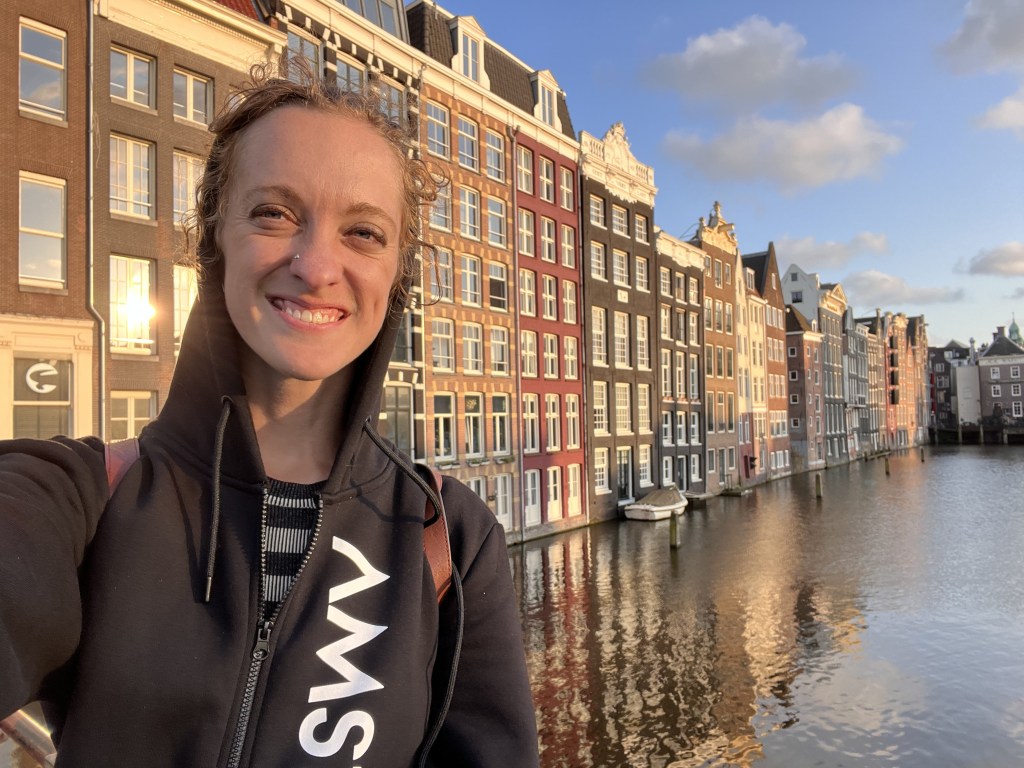
One of the public spaces I’m most grateful for is the art museum. A truly good art museum is one that is filled with the works of those whom God has “filled…with the Spirit of God, with skill, with intelligence, with knowledge, and with all craftsmanship, to devise artistic designs” (Exodus 35:31-22).
My favorite works of art to see in a museum tend to be paintings. Of all painters, my top three happen to all be Dutch: They are Johannes Vermeer, Vincent van Gogh, and Rembrandt Harmenszoon van Rijn.
I love Vermeer’s attention to light, van Gogh’s attention to color, and Rembrandt’s attention to detail. More than any other painters, their works most consistently and deeply move me to embrace Apostle Paul’s exhortation, “Whatever is true, whatever is honorable, whatever is just, whatever is pure, whatever is lovely, whatever is commendable, if there is any excellence, if there is anything worthy of praise, think about these things” (Philippians 4:8).
Last year, I spent my birthday (November 22) afternoon visiting the van Gogh exhibit at the Detroit Institute of Arts (DIA). This year, I intend once again to spend part of my birthday at the DIA. So, it seems fitting that I dedicate this post, which will be released on my birthday, to this art that I love so much.
This year, I had the nearly unbelievable pleasure of visiting the Netherlands and spending time with all three of these artists (through their work, of course). With this space, I’d like to share with you one work by each of these artists that most moved me on this trip. For each work, I’ll share the story of how I came to stand before that piece, and then I’ll share the details of the piece that stood out to me and left an impact on me.
- Vermeer: Girl Reading a Letter at an Open Window
How I got there: This year, the Rijksmuseum held a temporary Vermeer exhibit. According to Art News, “The exhibition featured 28 works by Vermeer, making it the largest exhibition ever devoted to him.” The exhibit ended up being a smashing success: “650,000 visitors from 113 countries [visited] during its 16-week run,” making it the most successful exhibit in Rijksmuseum history.
Tickets to the exhibit were severely limited and in very high demand. The general director of the Rijksmuseum, Taco Dibbits, explained: “Vermeer is the artist of peacefulness and intimacy. We wanted the visitors to enjoy it to the fullest. This was only possible by limiting the number of visitors.” Those limited tickets to sold out by Day 2 of the exhibition. I set an alarm for the very early hours of the morning on February 11 (as tickets could only be purchased during the museum’s operating hours, and that was on Central European Time, six hours ahead of me in Eastern Standard Time). I saw timeslots and days quickly fill up before my eyes, but I managed to get four tickets for the afternoon of Monday, May 15.
I woke up my dad to tell him I’d bought them, and just like that, I had plans confirmed to go to the Netherlands for a once-in-a-lifetime experience of our all-time favorite Dutch Master.
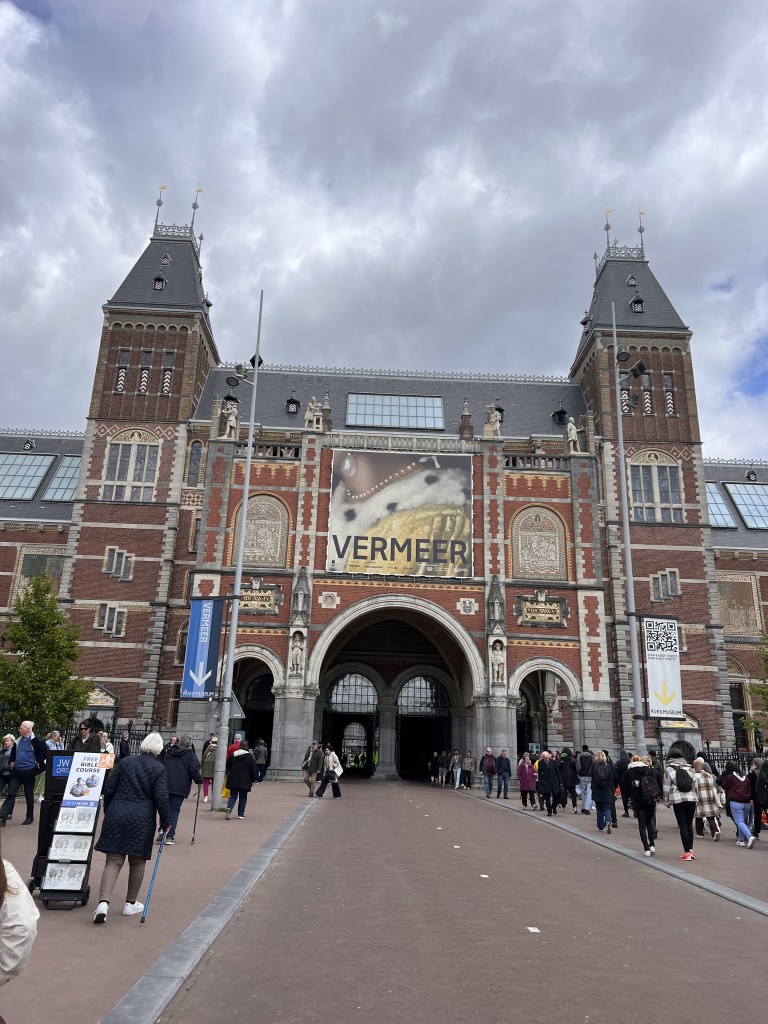
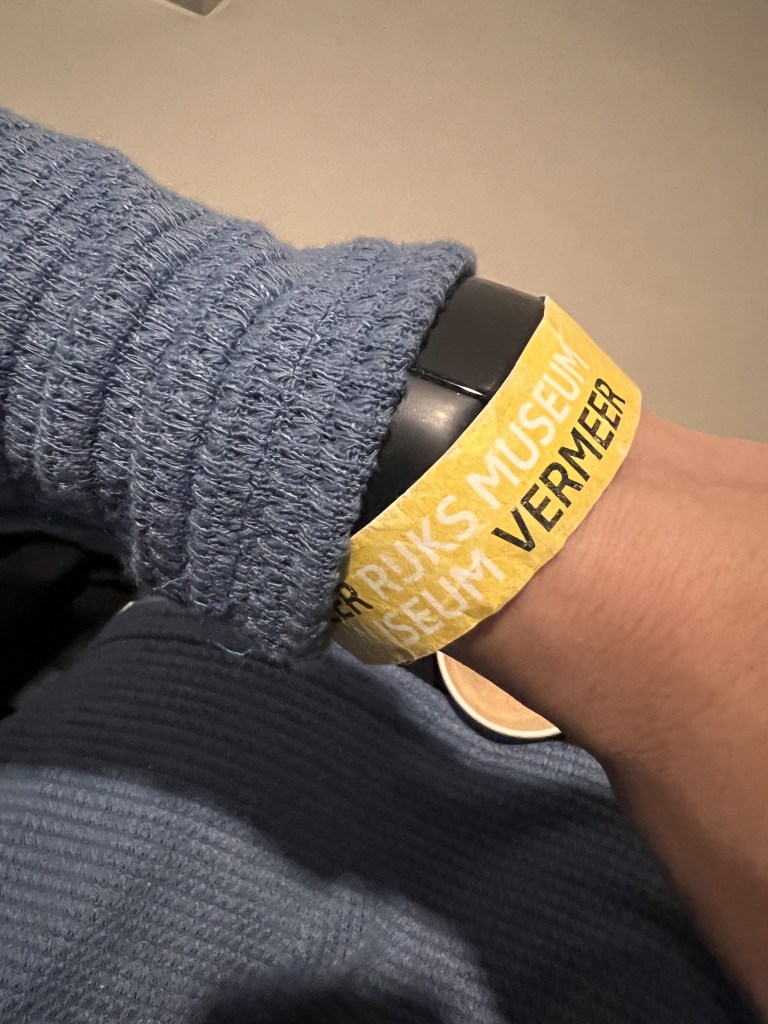
We went through the exhibit slowly, and then we left the exhibit to (literally) run to the main building before the museum officially closed. The Vermeer exhibit was open a bit later, so we returned for an encore lap.
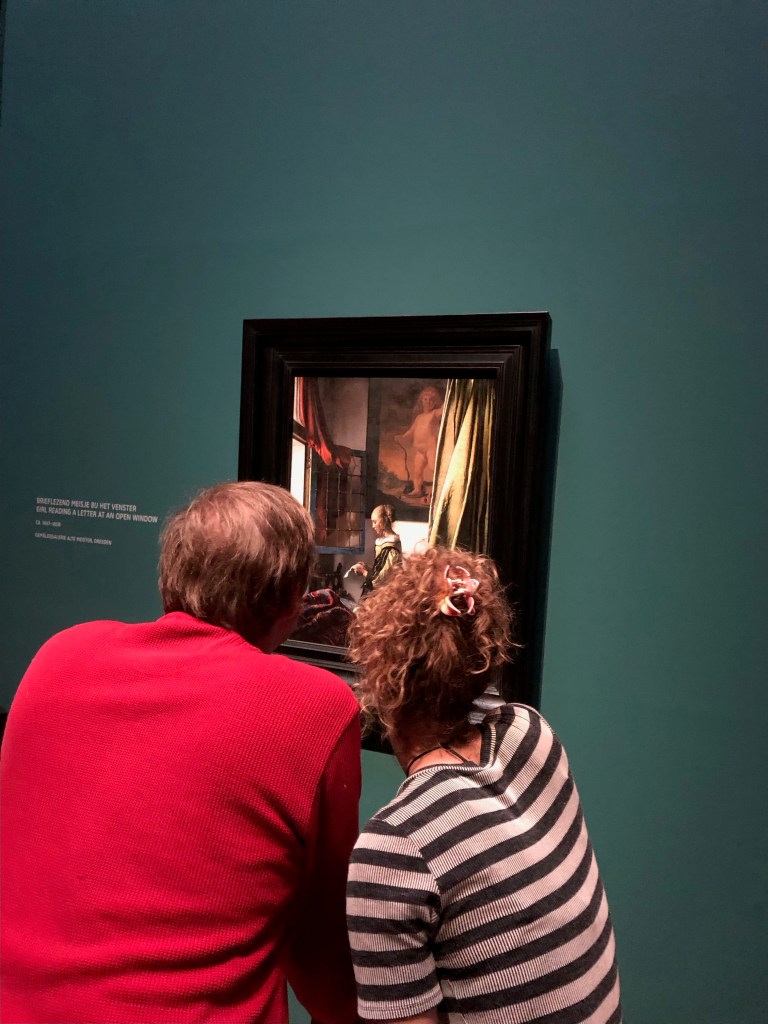
The painting itself: On both laps, the painting I spent the most time with was Girl Reading a Letter at an Open Window. Estimated to have been painted somewhere between 1657-1659, the work recently underwent restoration, completed in 2021.
I love looking for the narrative in Vermeer’s work. Here, a girl stands at an open window, reading a letter in the light of the sun.
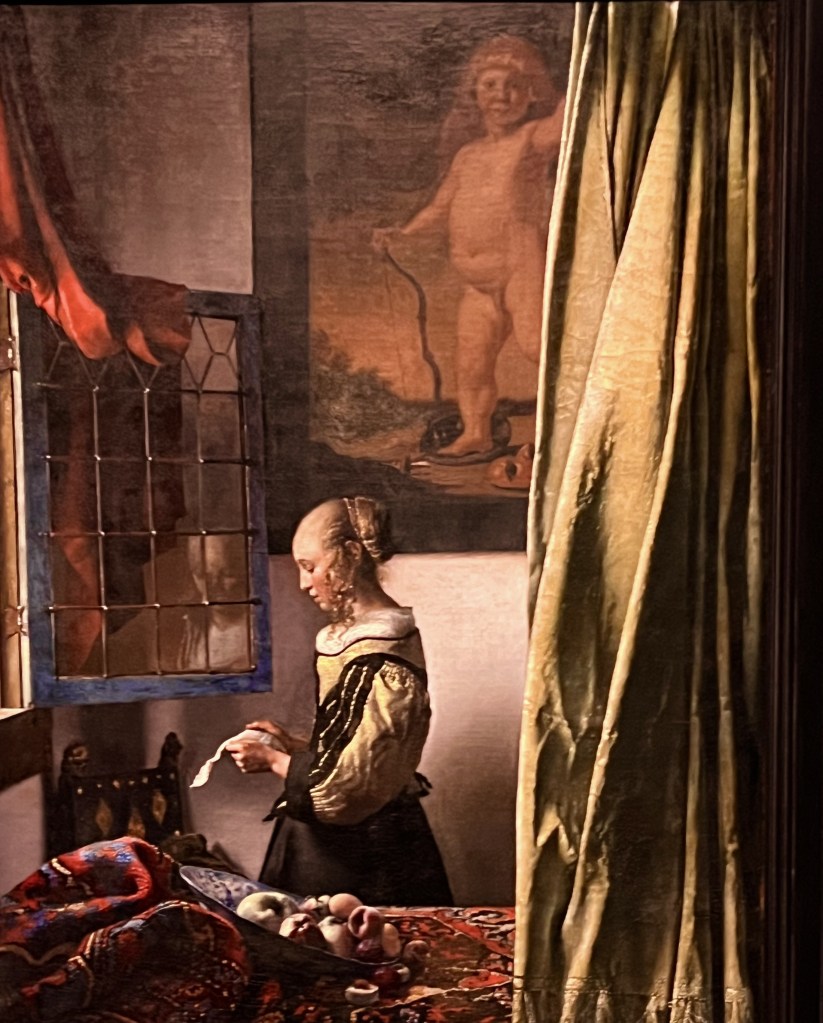
She is absorbed in the letter, and we look on at her profile. The restoration process restored Cupid’s presence to the canvas: He is the subject of a painting on the wall of the girl’s room, and our perspective makes it look like Cupid is pulling a curtain open so that we an witness this entire scene. It is a love letter she’s reading, then. A bunched up tablecloth and a bowl of fruit that’s been turned over suggest it’s an unbridled, passionate love.
I spent so long looking at the girl’s face, trying to discern her thought process as she reads. Does she want the letter’s author to appear at that open window? How many times has she read this letter, memorizing the words so she could play them back in her head later?
As I looked, Cupid and the curtain remind me that I shouldn’t be privy to this information at all. This is a deeply intimate, private moment for this girl, and she has no idea I’m looking. But I’m compelled by it all, and I can’t seem to look away.
That’s Vermeer’s gift: He captures the everyday, raw human emotions, in their heights and depths, and he invites us to take part in it, and even to feel raw emotion for ourselves.
2. Rembrandt: Jeremiah Lamenting the Destruction of Jerusalem
How I got there: When we could have spent the entire evening in the Vermeer exhibit, what made us run across the museum? It was Rembrandt, of course. I took a quick look at the directory and found which floor Rembrandt’s work was on, and that’s all I needed. Up the stairs, I raced to find the Night Watch (which was and is still undergoing restorative work). Then I rushed through each of the halls looking for more. I trusted I knew the marks of a Rembrandt well enough to recognize one from a distance while running by. And I did!
The Rijksmuseum permanently holds 22 of Rembrandt’s works, so there was a lot to see. Instead of taking a quick glance at each of them, I walked up to the one that called out to me. It was this one: Jeremiah Lamenting the Destruction of Jerusalem(1630).
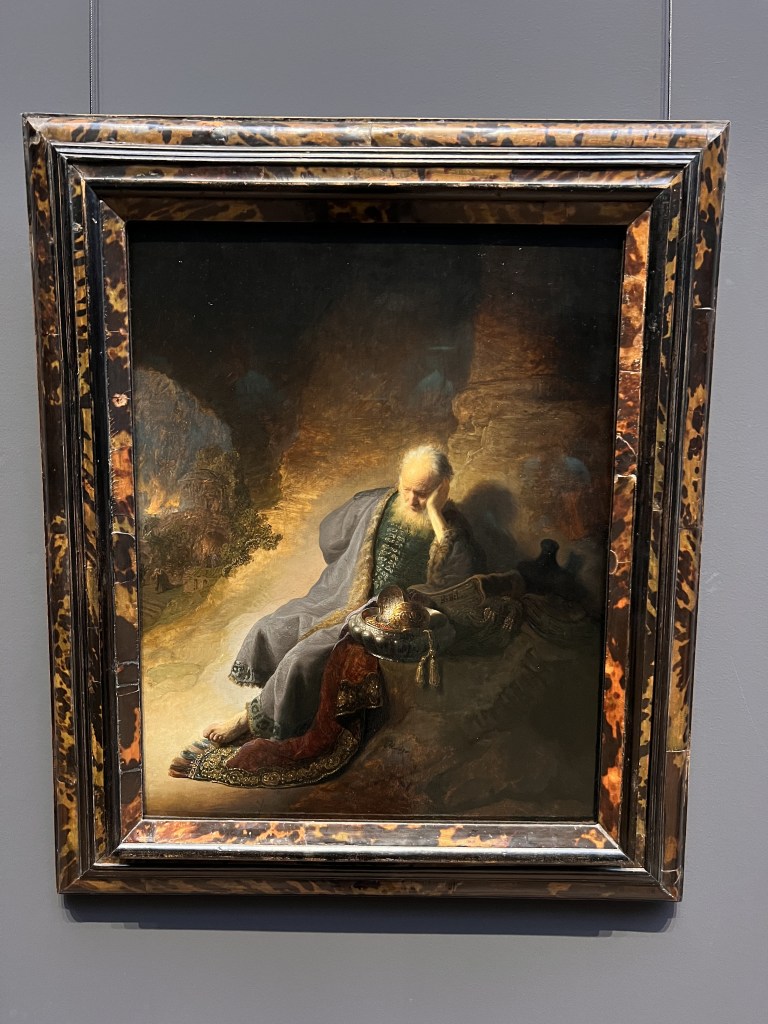
The painting itself: What is striking about this work is how clearly the story and the emotion comes through, even without looking at the title. This is communicated through Rembrandt’s use of detail. At left, a building, flames, and fire can be seen, but only in vague detail in the shadows. The walls of the cave where Jeremiah sits, too, are more roughly etched, with all sense of detail fading into blank darkness at the canvas edge.
The greatest detail is in the light, in the center of the canvas, on Jeremiah’s face. The most careful detail is found on Jeremiah himself: His forehead is creased in wrinkles of great distress. His elbow rests on a closed Bible, and his hand cradles his own head as he stares blankly at the ground. The scene is gut-wrenching, and Rembrandt captures it masterfully.
As I looked, I thought about Jeremiah’s context: his love for Israel, his conviction that God’s Word every word is truth that cannot fail. He knew what was coming, and he trusted the LORD completely. It was Jeremiah who wrote some of the Bible’s most deeply comforting words: “‘I know the plans I have for you,’ declares the LORD, ‘plans to prosper you and not to harm you, plans to give you hope and a future” (Jeremiah 29:11). With that said, he also wrote, “This people has a stubborn and rebellious heart; they have turned aside and gone away” (Jeremiah 5:23). Israel had failed to be a people set apart–had failed to be the light to the world they were called to be, had failed to hear the word and believe it. When they were told, “Stand by the roads, and look, and ask for the ancient paths, where the good way is; and walk in it, and find rest for your souls,” Israel had said, “We will not walk in it” (Jeremiah 6:16).
So, here Jeremiah was, saying, “Flee for safety, for disaster looms out of the north, and great destruction” (Jeremiah 6:1). He knew what was coming, and he knew why. But that didn’t make it any easier to live through that very real darkness. His heart was broken for Israel. It’s written in the wrinkles on his face.
Rembrandt painted during a time when literacy was not the common privilege it is today. More than today, people were forced to rely on others to communicate biblical truth to them. How amazing, I thought, that masters like Rembrandt were there to communicate the deep emotions of Scripture visually. I’m grateful for his work, and for my moment to share in Jeremiah’s lament, even 2600 years after the destruction of Jerusalem.
3. Van Gogh: Almond Blossom
How I got there: When my family visited Amsterdam together for the first time in 2012, we visited the Rijksmuseum and saw a handful of van Gogh’s works. A confused rookie, that was the day I learned that there’s an entire separate museum dedicated to van Gogh a short walk away. Tickets need to be reserved in advance, and we didn’t have the time to visit on that trip.
This time, sitting in the airport in Fort Myers, I looked online and saw that there was one time slot available to visit the museum during the two weeks I’d be in the Netherlands. It was for the afternoon of May 22, several days after my parents would have left the country, and less than 24 hours before I was set to fly out of Schiphol myself. I booked a single ticket immediately.
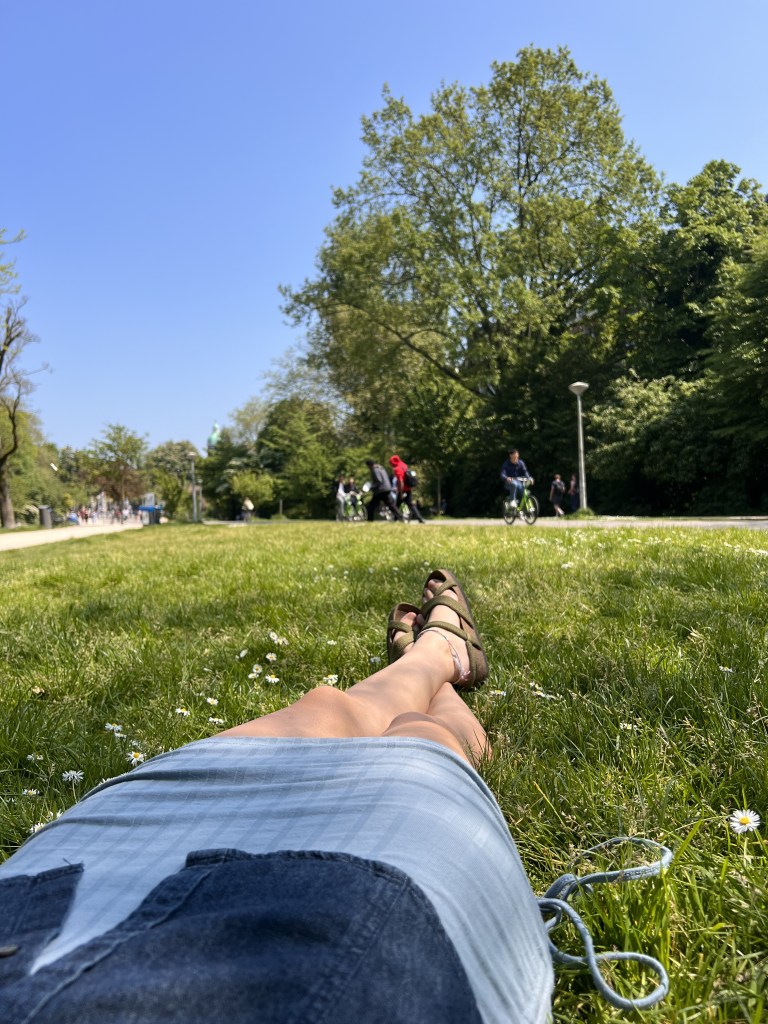
It was a perfect day, and a perfect end to a perfect trip. I spent the morning roaming the streets visiting markets, looking for places to spend my last euros while listening to lectures on systematic theology for a class I’d be starting when I got back to the US. I stopped by a candy shop and fully indulged myself, delighted as a kid. I went to a little shop near Vondel Park and got a sandwich, some dark chocolate, and some DIY fresh-squeezed orange juice (something I did I-don’t-know-how-many-times on that trip). I went to the park and laid in the grass for a one-woman picnic. With an hour to spare before my museum admission time, I put on some lowfi hip hop beats and kicked back. I opened up my candy and dark chocolate, and I finished off a box of White Diamond truffles. I’d be ready for my trip with van Gogh.

The museum closed at 6pm, so I had just over three hours to immerse myself in the exhibit. And immersed, I was. The museum is wonderfully curated, chronicling Vincent’s artistic journey in light of (and in the darkness of) his perpetual inner battles. Excerpts from his personal letters are dispersed on the museum walls, providing personal insights into each chapter. Most striking and memorable is the correspondence between Vincent and his brother Theo, whose loving support was a vital constant to him. It was while reflecting on their relationship that I came upon van Gogh’s Almond Blossoms.
The painting itself: I listened to the audio guide tell the story of this painting while my eyes got lost in it:
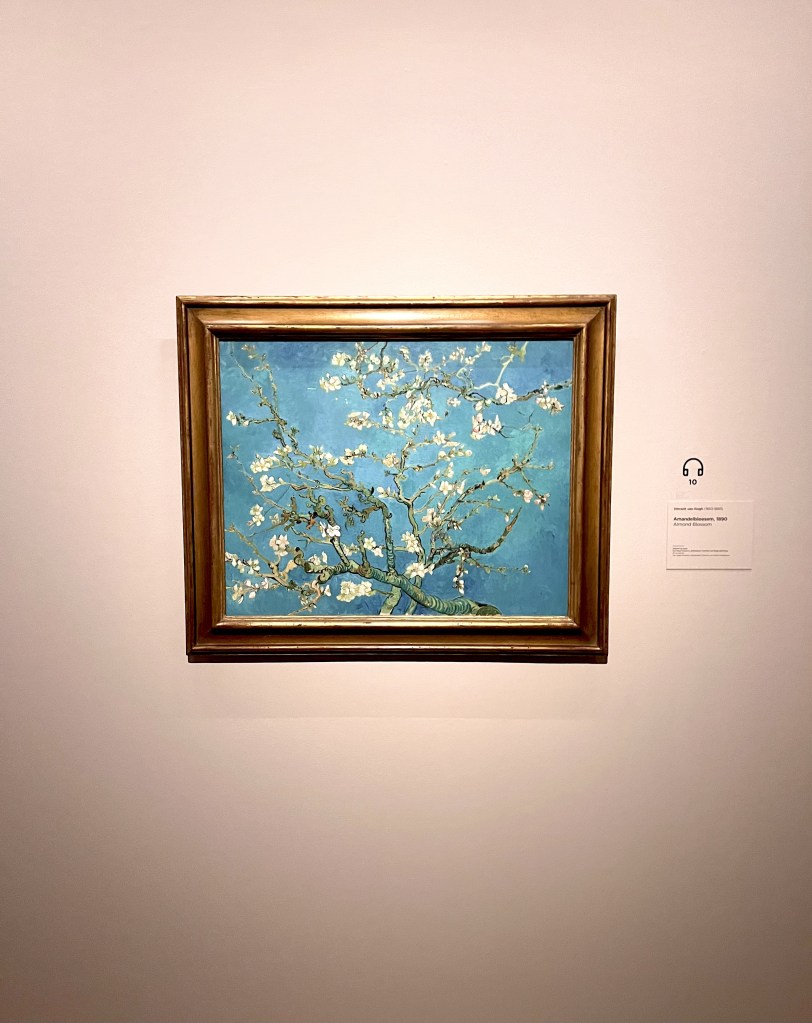
“Large blossom branches like this against a blue sky were one of Van Gogh’s favourite subjects,” the guide said. “Almond trees flower early in the spring making them a symbol of new life.” Perhaps I was also drawn in by the familiarity of this subject and concept: “Van Gogh borrowed the subject, the bold outlines and the positioning of the tree in the picture plane from Japanese printmaking.” It was both comforting and hopeful to me, and as I listened I continued to pour over every detail.
In fact, the guide continued, this work involved more painstaking detail than was typical by this time in van Gogh’s career. (This piece was painted in the winter of 1890, only months before he would end his own life in July.) Why the exceptional care in this piece?
The guide explains, “The painting was a gift for his brother Theo and sister-in-law Jo, who had just had a baby son, Vincent Willem. In the letter announcing the new arrival, Theo wrote, ‘As we told you, we’ll name him after you, and I’m making the wish that he may be as determined and as courageous as you.’”
Vincent wrote upon receiving the news, “It does me, too, more good and gives me more pleasure than I could express in words.” Instead of words, he expressed it in painting–in this painting. Full of new life and the hope of spring, I imagined how much hope Vincent wanted for his nephew. “May his life be marked by the bright hope that I’ve had the joy of experiencing deeply, in all-too-fleeting bursts,” I could hear him saying.
I stood there longer than I did any other painting, reflecting on my own life and my own experiences with those deep emotions. When I left the museum, I messaged my sister:
“I wanted to tell you the story of this painting. Vincent drew it for his brother Theo’s newborn baby’s room. Theo named the baby Vincent, and the painting was one of his most cherished possessions. And as I was walking through the museum and reading/reflecting on the relationship between Theo and Vincent, I felt a deep connection between their relationship and ours–yours and mine.
Vincent, everyone knows, struggled with mental health problems. He also felt things so so deeply and personally. That came out in his work brilliantly. And Theo was so supportive and proud of his work, and he loved Vincent with this really pure, simple, honest love. And that love meant a lot to Vincent, it was clear to me as I was looking at these paintings.
They had a special exhibit on the last two months of Vincent’s life, when he painted like 76 paintings (so averaging more than one a day!). He was painting with this urgency to convey all the beauty he saw, and he got this super laser focus on his work, and Theo just kind of accepted that and loved him for who he was.
So I was walking through the exhibit and feeling all of these emotions so deeply and vividly, just as Vincent intended, and I got this sort of laser focus on it as all the other museumgoers just quickly passed the paintings by or took selfies… A mix of emotion because, of course, I am empathetic to Vincent’s deep pains, but I’m also so appreciative of how he dedicated himself to recording the beauty he saw through his pain. So much open honesty in his work, it was just very moving to enter into his space and his mind.
And I am grateful that it made me reflect and feel very deeply my appreciation for the love you have for me.”
As I continued to reflect, I thought of all those in my life who have loved me unconditionally. So many people have been supportive of me in all my life chapters and travels. Some of those people consistently make an effort to reach out to me, and whenever I’m in town (wherever their town may be), they make it a priority to spend time with me. They do this regardless of the amount of time I’ve spent away, or the length of the silence that’s gone between messages. Regardless of the times I get laser focused on work, or when my inner battles require so much of my bandwidth that I don’t have enough left to reach out to those I love. I’m so grateful for each of them–for each of you.
Final note of gratitude:
I’m so grateful for my trip to the Netherlands this year, and for my trip through these museums. These works capture truth–pure, lovely, commendable, excellent, praiseworthy truth. It has been my pleasure to think about these things.
 Detroit, Reformed.
Leave a comment