“[L]et us run with endurance the race that is set before us.” – Hebrews 12:1
Discovering My Mental Stamina
I remember sitting in the fellowship hall of Mustard Seed Church in Osaka, Japan, back in 2019, talking with a guy named Arthur about our study habits. I often tell people about my habit of hopping from one study/work spot to the next: “I work one place for as long as I can, and then I move to a different one, and it sort of tricks my brain into thinking it’s the start of a new day so I can keep going!” I mention my to-do lists and how satisfied I feel as I cross off each item on the list. I hear my mom confirm with people often, “Sarah makes a to-do list, and she does not go to sleep until every item on it is done!” As Arthur and I bonded over our shared hobby of self-study, he said, “Have you ever thought of it in terms of stamina? Like, some people are really physically fit and have great stamina. You have mental stamina. You’ve got that endurance to just keep going.”
I had not, in fact, thought of it in terms of stamina before. In more recent years, though, that angle has helped me understand the part of me that consistently seeks out endurance activities. Perhaps, for example, it’s why I thrive in graduate school. (That’s not to say grad school doesn’t stress me out, but I am used to processing it and getting favorable results.)
Perhaps it’s also why in the past year, I’ve embraced two major endurance activities: Hiking the Appalachian Trail, and running a half marathon.
Of course, both of those activities have a hefty physical component. One involves walking 2,194.3 miles (the AT’s length in 2022, when I did my thru-hike), and the other involves running 13.1 miles (somehow the more daunting to me of the two). But really, both activities require (in my experience) primarily mental stamina and endurance.
Hiking the Appalachian Trail
The Appalachian Trail takes hikers through 14 of our United States (listed in the order I walked them: West Virginia, Maryland, Pennsylvania, New Jersey, New York, Connecticut, Massachusetts, Vermont, New Hampshire, Maine, Virginia, Tennessee, North Carolina, and Georgia). Answering the Frequently Asked Question, “How hard is hiking the Appalachian Trail?”, the Appalachian Trail Conservancy (ATC) answers,
“Hiking the entire A.T. is a grueling and demanding endeavor. It requires great physical and mental stamina and determination. The terrain is mountainous for its entire length, with an elevation gain and loss equivalent to hiking Mt. Everest from sea level and back 16 times.”
Appalachian Trail Conservancy, FAQ
There were times during my hike when I needed that physical endurance: For the first 10 days or so (before developing my “trail legs”), I would crawl into my tent and realize that my legs—and I mean, every bit of my legs—were completely sore. In Massachusetts, I needed to rest as signs of an overuse injury crept into my left shin, and in New Hampshire I could feel the same in one of my knees. I had to do a lot of close listening to my body, resting strategically so I could not only physically endure but continue to truly enjoy my walk across the country.
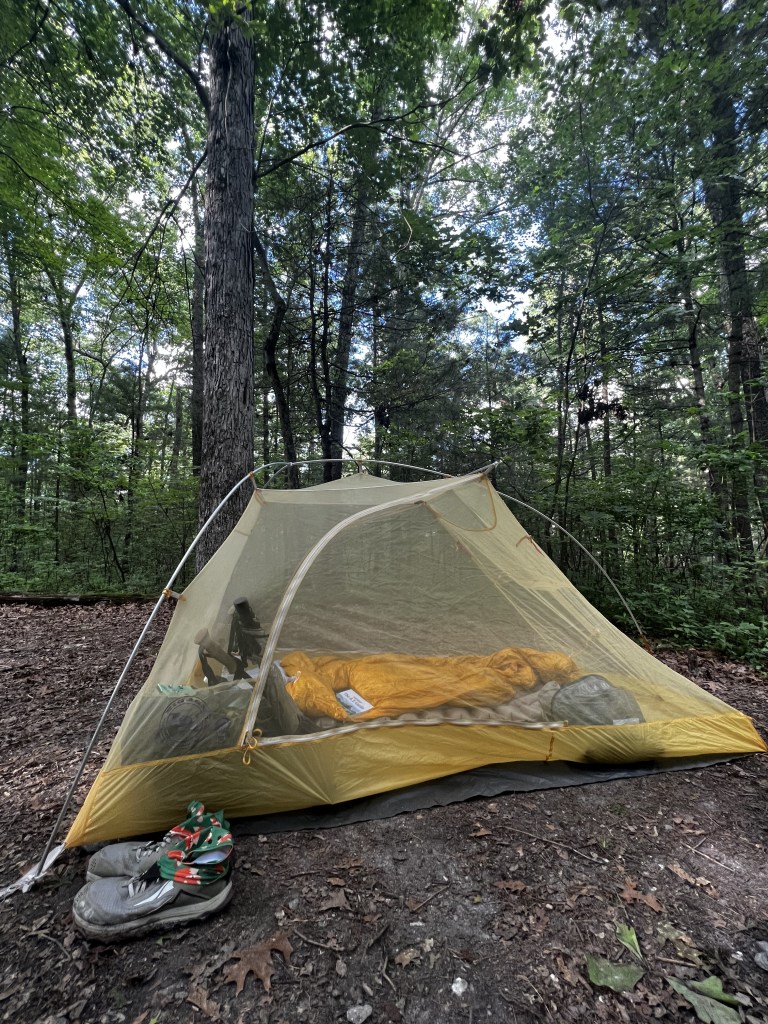
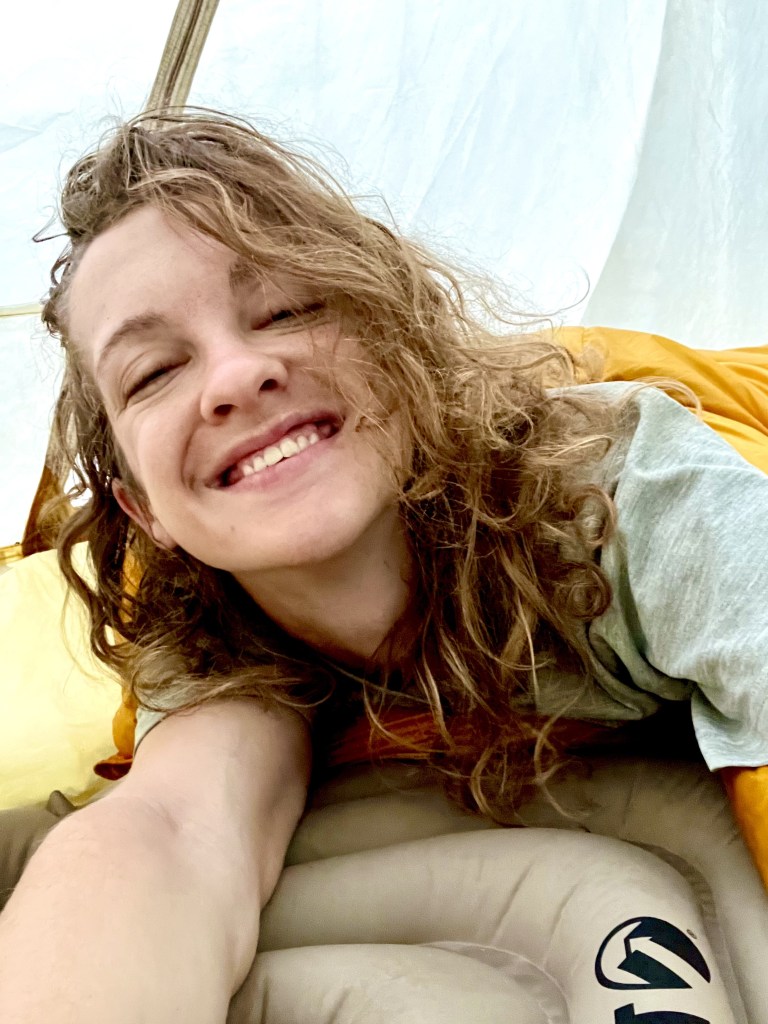
More than that physical endurance, though, I found myself needing to embrace that mental stamina Arthur told me I have (and the ATC confirmed I’d need!). I often spent every hour of daylight walking, and many of those hours were spent walking alone (which I liked). My hike took me just over 5 months, so that’s really a lot of hours!
I spent those hours in many different ways. I got into a habit of spending the first 2 miles of each day praying through the Lord’s Prayer, expanding extemporaneously on each line. (“Give us this day our daily bread.” God, I’m so hungry and I only have these couple of slices of bread, one protein bar, and a couple extra packets of Breakfast Essentials left. May this last me until I get to this next town…) I often listened to music and sang when I was hiking in the dark, or when it was raining really hard. I listened to audiobooks of classic novels, comedy podcasts and stand-up albums on Spotify, and even course lectures. (Yes, I took a graduate course remotely while hiking…)
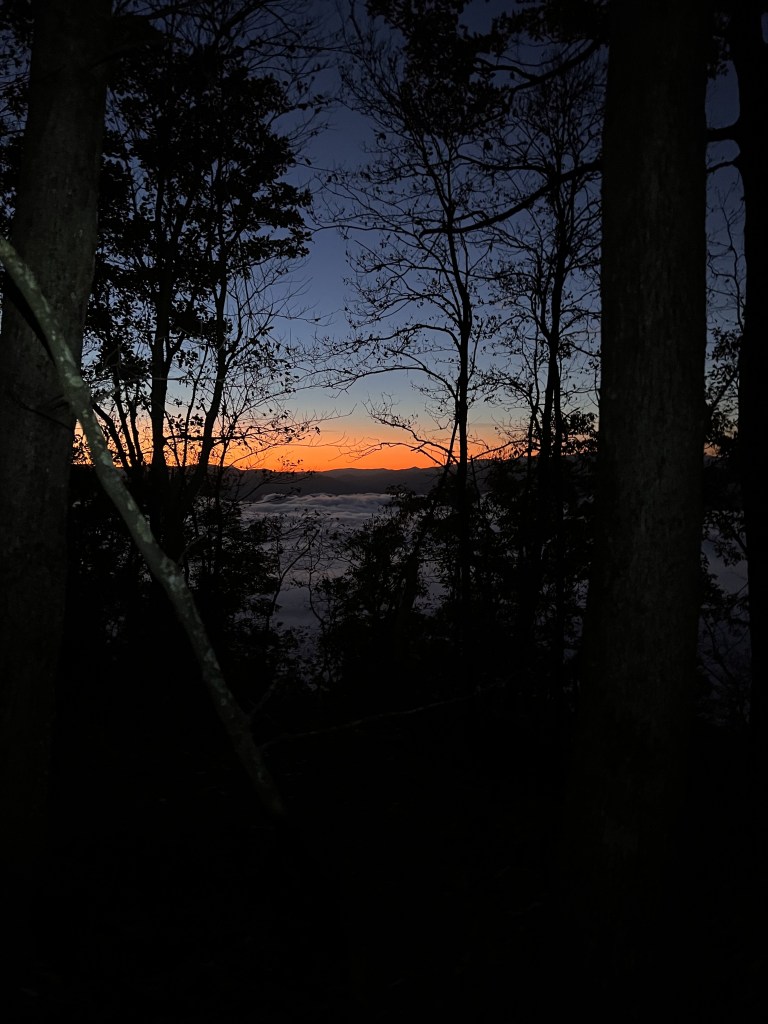
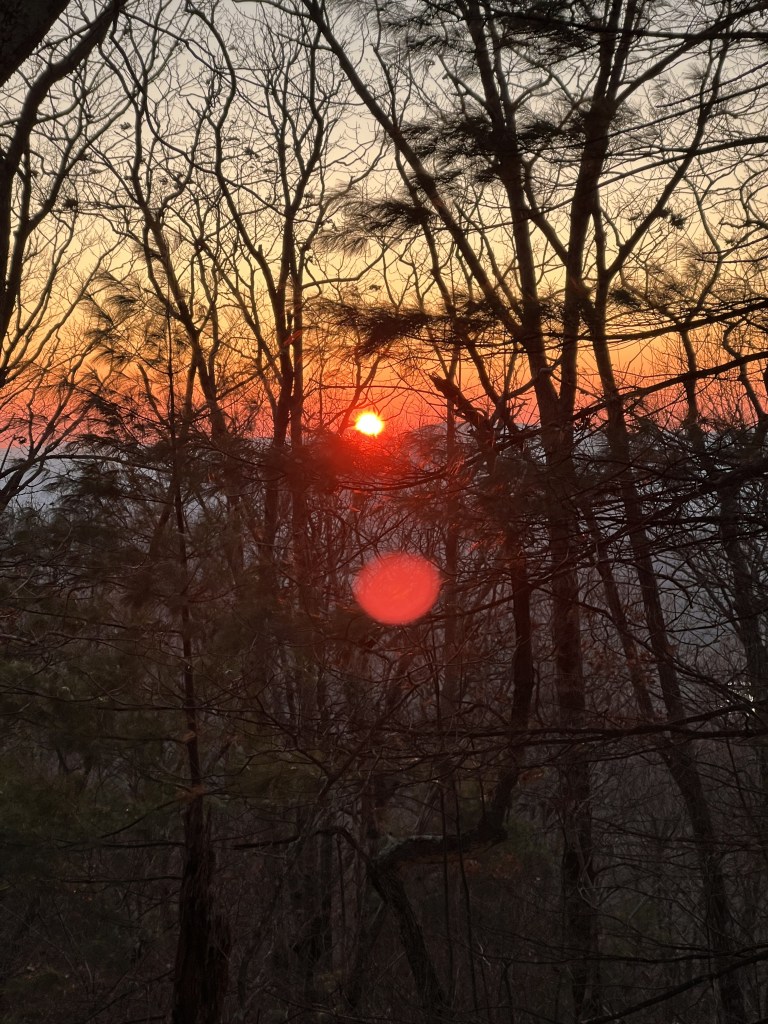
Sometimes, I’d make a game out of seeing how fast I could get through a mile. A common pace goal for thru-hikers is the 20-minute mile, covering 3 miles an hour and readily hitting at least 20 miles for the day. So, I’d download episodes of Seinfeld from Netflix and listen to the episodes through my AirPods (I didn’t need to see the screen, since I can see the episodes in my head after watching so many times), and I’d make sure I hiked a mile by the time the episode ended. I did this most often at the end of the day, hiking into camp after sunset.
Other times, I’d just walk in silence, listening to and mimicking the local birds, or writing parody songs in my head, replacing the original lyrics with trail-related lines.
Still other times (not very often, honestly, but sometimes), I was just bored. Sometimes painfully so. This happened especially on “town days,” when I was going to be getting off trail to go to town to resupply on food, do laundry, and find a place to take a hot shower and charge my devices. I’d be walking my miles in the morning, just wanting to be in town already, and those times were mentally the toughest. My brain would be nearly screaming out in that boredom, and I’d just have to keep walking. I’d think, “I just want to stop here and sit down for a while,” but then I’d think, “No, if I sit down, it’ll just take even longer to get there. I can keep walking, so I will.” And I always did.
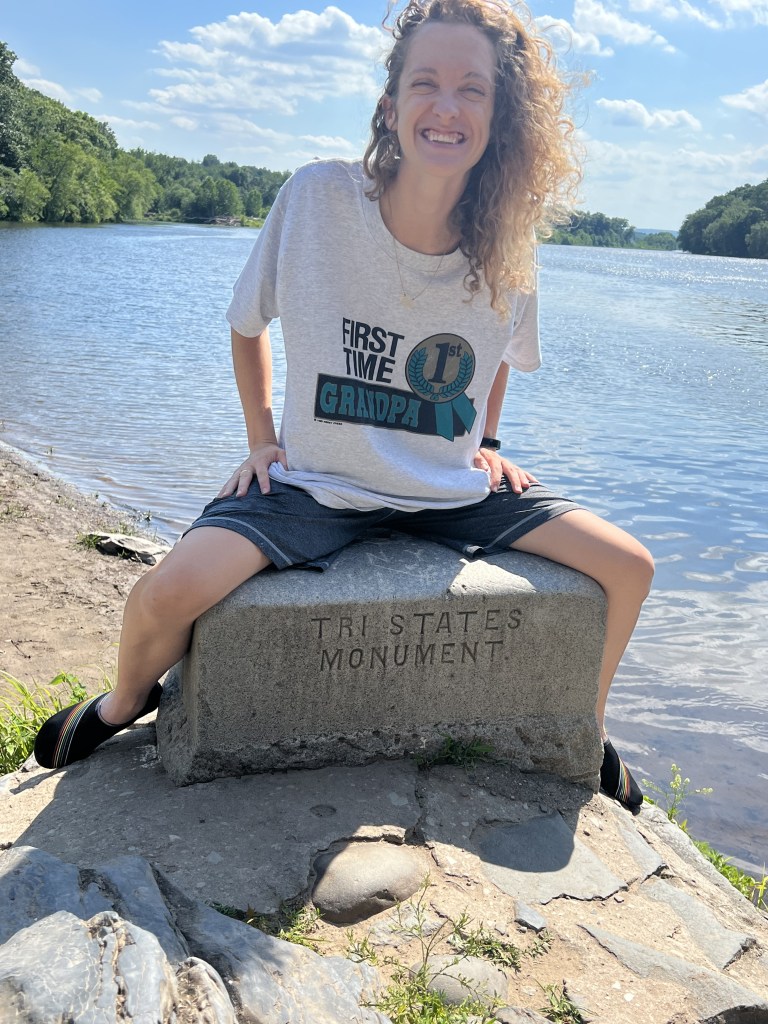
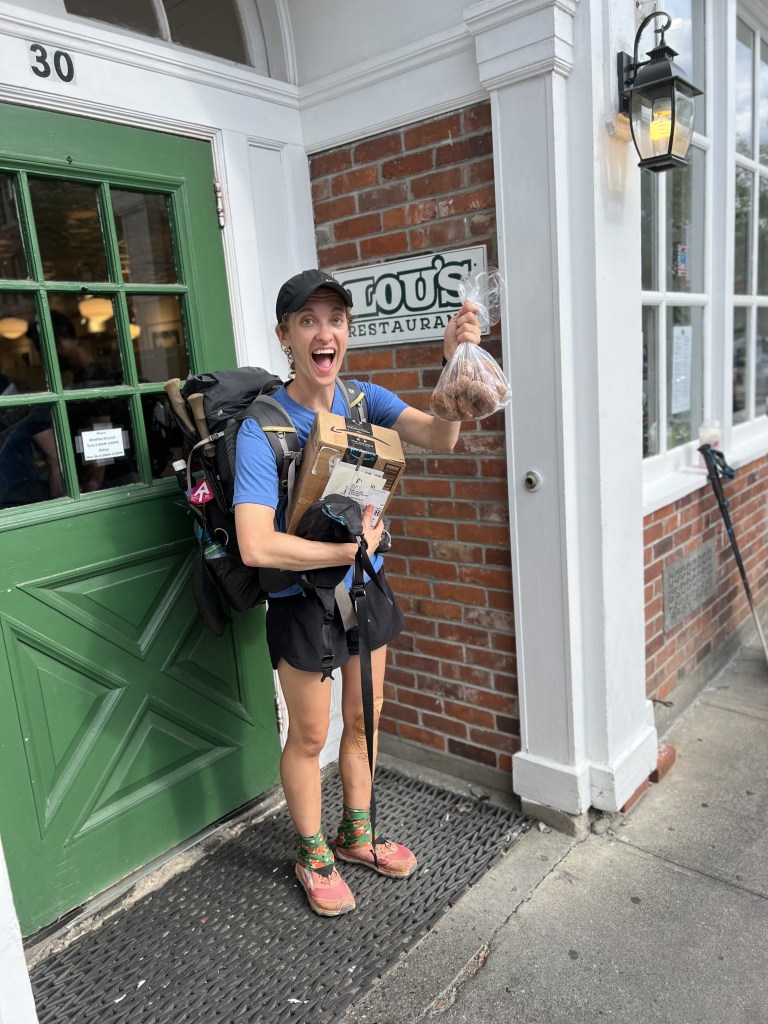
There’s a common expression in the hiking community that goes, “Never quit on a bad day.” That mentality helped get me through those mentally tough moments. I’d often ask myself, “Where would you rather be right now? If you weren’t out here, what would you be doing instead? Would that be better?” The answer was always, “Well, no.” I was where I wanted to be, and I truly loved my backpacking lifestyle, so I kept walking and focused on intentionally connecting with and appreciating each moment and each little piece of this Trail I was coming to love more and more. I thought of the people who’d finished hiking and gone home, only to miss the trail life, and I redoubled my efforts to enjoy every bit.
It took this sort of self-talk to mentally endure through the harder moments, and it was worth it. At the end of my hike, when people asked me, “What does it feel like to be a thru-hiker now?” I remember saying, “It’s weird, but I feel like I’ve always been a thru-hiker, only now I’ve lived out the moments in time where I actually did the hiking.” Surely, the physical and mental endurance aspects of thru-hiking the A.T. were a huge part of this feeling so natural and at-home to me.
Training for a Half Marathon
Four months after finishing my thru-hike, in March 2023, I saw an ad online for a runDisney event happening the first weekend of November. I have no idea why the digital world thought I’d want to see that. (It certainly wasn’t a case of me talking about running and then seeing targeted ads for it later that day!) I’ve always firmly said, “I am not a runner.” I had run exactly one mile exactly three times in my life, and that was it. Visiting Orlando during a previous runDisney weekend, a lady in the lobby of our hotel asked as I was checking in, “Are you here for the race?” I hadn’t even realized it was a race day, I’d said. “Are you sure?” she countered, “You look like a runner.”
“Ma’am, I’m not a runner,” I said, laughing on the inside at the idea that maybe I really had signed up for the race and made it as far as the hotel only to forget why I was there. “I’m a long-distance hiker, and I take my time.”
When I saw that ad for runDisney in November, I realized the races would fall on my sister’s 30th birthday weekend. I messaged her, “Look, you could run a Food & Wine 5k at Disney on your birthday!” She responded in less than a minute, “I AM! I just registered for the half marathon on the Sunday! Like 2 mins ago! You should do it!”
I told her I was considering the 5k, which would be on the morning of her actual birthday. I wasn’t a runner, but I figured I could walk that far in the allotted time, surely! so I’d sign up in a show of support for my sister. As we texted, I was in the long virtual queue to try to register.
Rachel continued, “Ian [her husband] thinks you can do the half by November, though he’s mentally a super tough person. Takes ice cold shower[s] for the heck of it.” As we had this exchange, I made it through the queue to find the 5k already sold out. Then the 10k sold out, too. All that was left was that half marathon…
I started considering more seriously. But “I’m not sure how on earth I’m gonna train for this,” I said to Rachel. “I’m gonna need a plan.”
“Small or Medium shirt?” was her reply. Then she added, “FYI. I can walk a mile in 15 mins fairly easily. So when training gets tough, remember you can always walk fast as a back up!”
“Yeah!” I said. “I always knew I could hike a reliable 2mph pace, and that helped me relax some. Good tip :)” The conversation ended there, and I was registered.
The next day I went to Fleet Feet and tried out running shoes. Hiking life had definitely taught me the importance of good shoes. The staff kindly let me run laps around the shopping plaza, comparing shoes to find what fit me most comfortably. I ended up with a pair of Topo Athletic Specter shoes for road running.
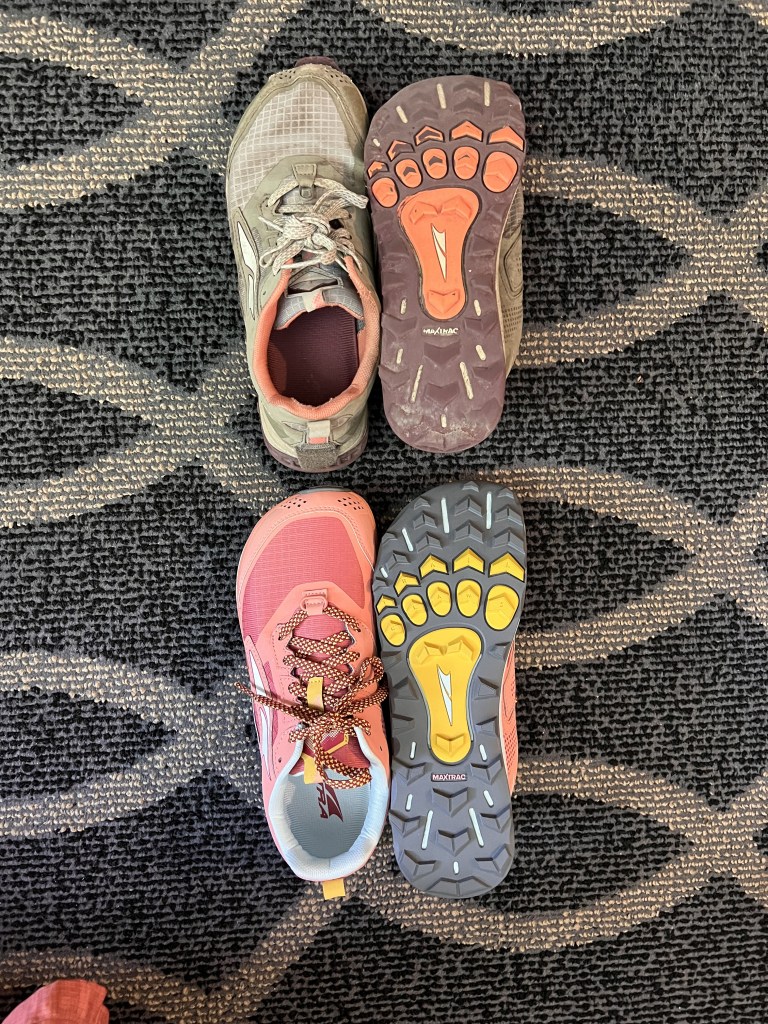
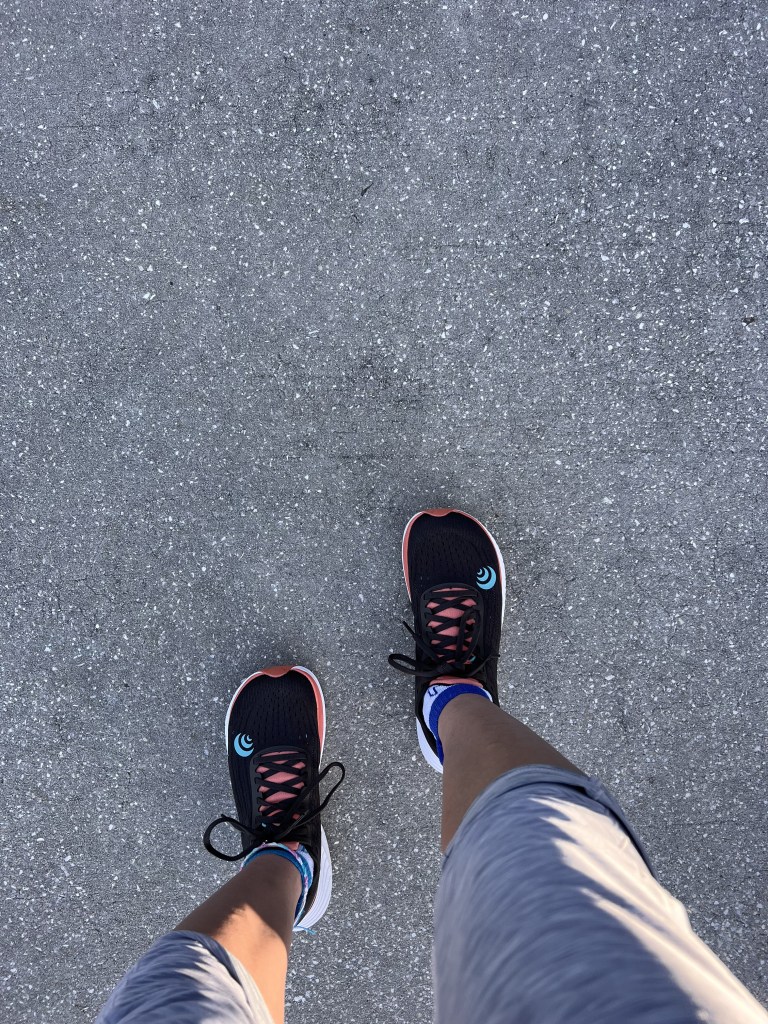
I was happy with them, so next I texted Rachel, “Do you have a recommended app to use for half marathon training?”
She replied, “I used an interval timer app when I first started, and I use Garmin’s app because I have a Garmin running watch. Other than that, I don’t use apps.”
I started out with interval running, following a free trial plan from an app called 13.1. The plan had a variety of workouts in the week, slowly building over 12 total weeks. Week 1, Day 1 called for a five-minute warmup walk, then alternating running for 3 minutes and walking for 2 minutes (for a total of 7 times), ending with a five-minute cooldown walk. Two days a week were for 30-minute cross training, and one day was a rest day. By the end of Week 6, the intervals had grown to running 4 minutes and walking 1 minute, repeating 14 times to run approximately 7 miles.
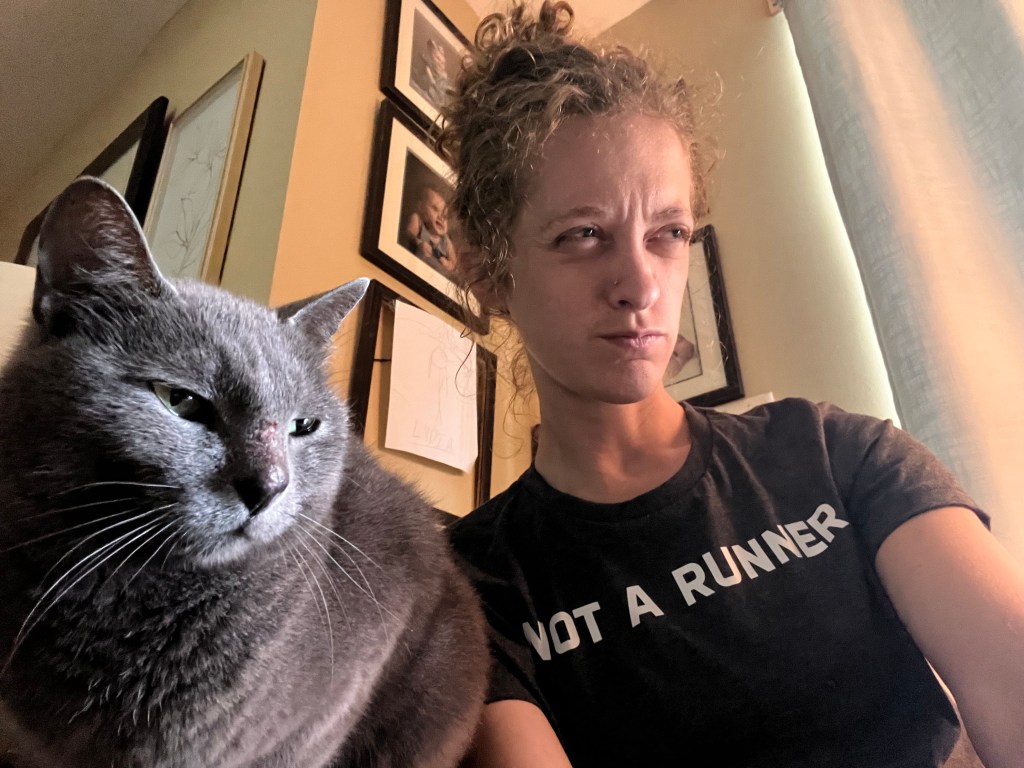
I started with Week 1, Day 1 on March 25, and I made it two days into Week 7 on June 2 with that app’s plan. I was enjoying the regular activity, especially the cross-training days when I’d cycle around the neighborhoods. I’d put on my new shoes and my proud “NOT A RUNNER” t-shirt, and then I’d listen to audiobooks while I ran. I’d tell myself, “You like that book? You can only listen to it if you go for a run!” That got me out there consistently.
A few weeks into my training, Rachel and her family came down to Florida to visit. While with us, Rachel and I went for a couple bike rides, and we also went on a run together. It was my first time going for a non-interval run during this training period, and it would be my first time ever trying to run more than a mile. Together, we ran a 5k. Just like that!
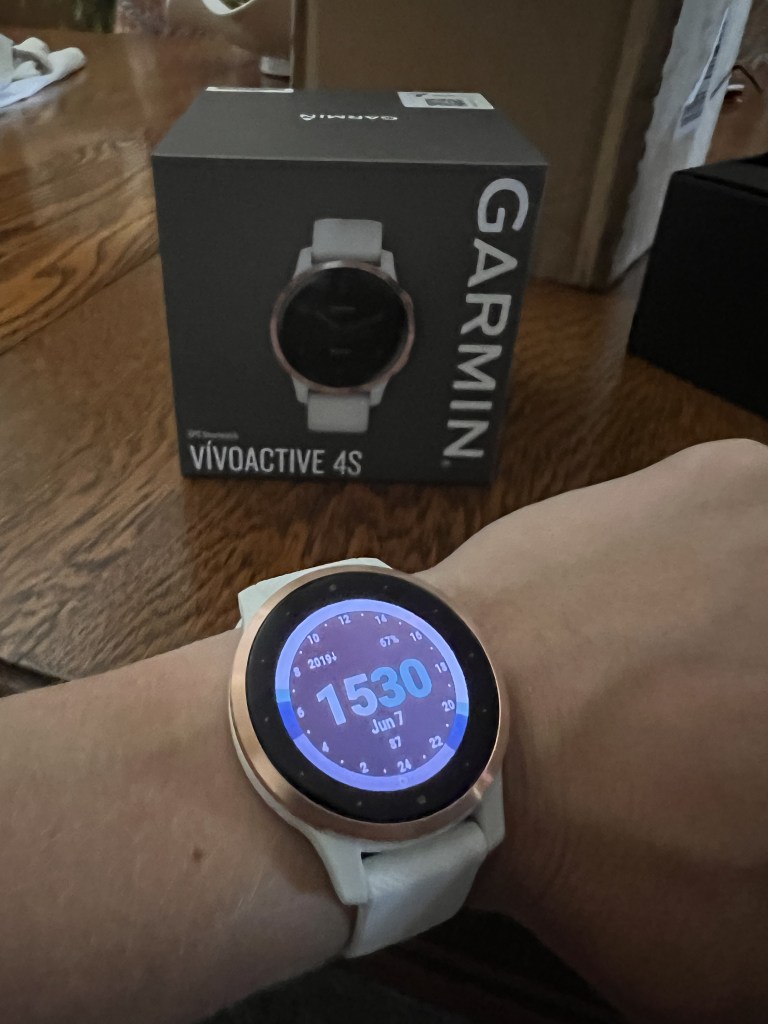
Looking back, I can say with confidence that that run changed something for me. Rachel set the pace, and at the beginning I felt like we were running much slower than we should be. It felt like I was intentionally holding myself back, and I’d never done that before. We went that one pace the entire time, and at the end I felt like I could’ve kept going. (Once we stopped, my legs argued that it was a good thing we didn’t.) Thanks to that run, the adage “pace yourself” took on a new layer of meaning. I learned a bit more about running with endurance, and I was even more hopeful that I could run a half marathon by November. (I was also eager enough to jump on the Garmin watch bandwagon, so I could have more fun planning routes and tracking the stats of my runs.)
I was motivated, and I knew I wanted to start running “for real” rather than doing more weeks of interval training. Even with that decided, I ended up taking a rather sudden break later in June. My summer semester of classes had started, I was working as much as I could to save money for my potential upcoming move, and the humidity of the Florida summer was becoming brutal. I told myself, “This is going just fine. The race isn’t until November, and I’ll have plenty of time to train leading up to it. Even if I go this slow pace I can go now, I’ll be able to finish the race.”
I took a break until August 12, when Rachel messaged me, “We’re 11 weeks away from the half marathon!”
”Yeah, and I haven’t gone for a run in over a month! I feel almost zero motivation on my own. In fact, thinking about it makes me feel so overwhelmed that I tend to just push it off my place like it isn’t even there. I’m struggling on that front!”
“Well,” she said, “I was just talking to Ian. Since Dad is spending the night Sunday, maybe you would be interested in spending the night as well to get some hangout time. I’ll be running Monday morning around 6:15 if you want to join in for a few miles of easy running.” I thought that sounded like a great idea.
We ran our second 5k together that morning, and it was in fact great. Rachel also shared with me Runners World’s “12-week sub-2:30 Half-Marathon training plan,” which I ended up using regularly for those last 11 weeks leading up to the race.
As it turned out, this current life chapter ended up being great for training with that plan. I spent the month of August with my grandmother down in Temperance, and I started going for runs in the countryside around her house. On one of those runs, I did a six-mile route that included the four-mile loop around the block I grew up on. My dad used to tell me about his daily four-mile runs with his dog Faux Pas, and I thought it would be cool to run that same route they used to. That was good motivation for getting out there and getting that Personal Record (PR) run in.
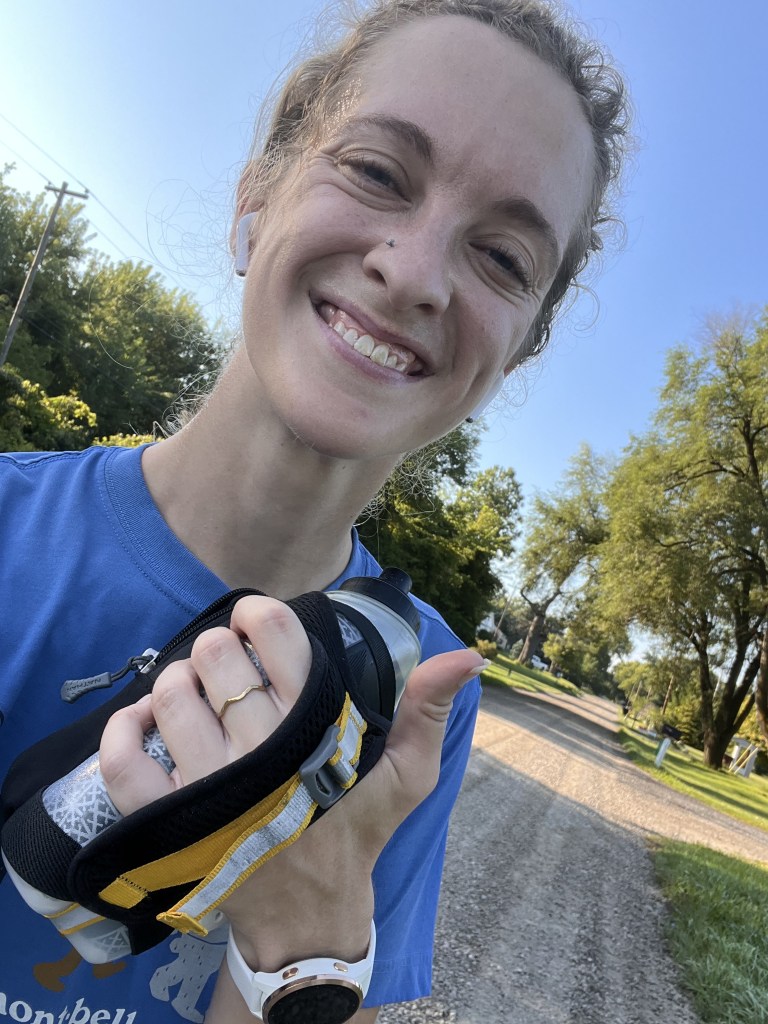
I also moved to Detroit during this 11-week period, so I had a whole new city to run around and explore. Detroit’s downtown area, the RiverWalk, and Belle Isle have all been a pleasure to get to know while on foot, especially as the midwestern autumn season started to set in. It’s all helped this feel like more of an adventure, and that’s done a lot to help mentally out there.
runDisney Race Day
Now, it’s the evening before the race. We’ve spent a few days walking around the Magic Kingdom and EPCOT, enjoying family time (nephew’s first visit!) and eating/drinking our way around World Showcase. Today, Saturday, has been a day to rest our feet and our legs and our souls. Rachel, Ian, and I all picked up our race bibs and shirts this morning, and I’ve spent time in my own mental space.
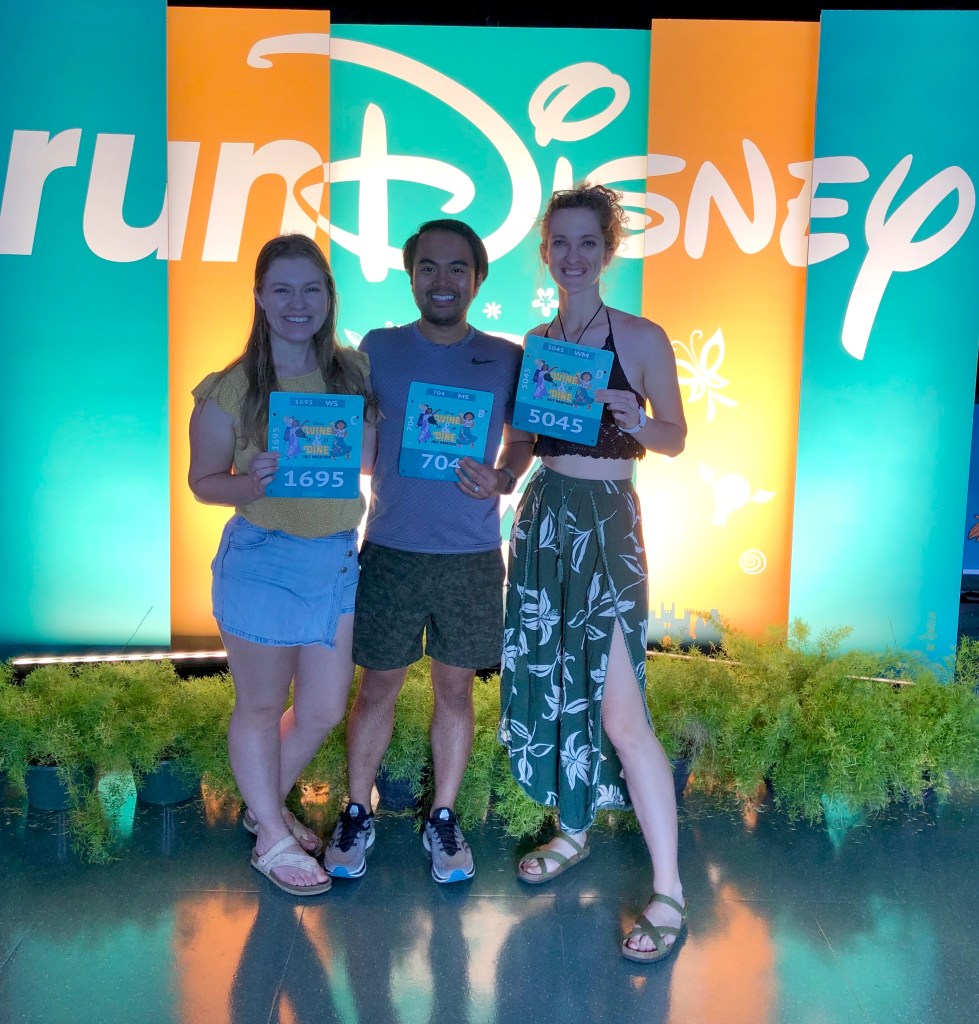
I’m not super excited about the race’s Encanto theme, nor about waking up at 3am to head to the park to get set to race (which officially starts at 5am), nor about running on Florida highways in the dark. But I am hopeful! I am so glad to be here, to have my sister to run next to me, to have a whole playlist of Disney remixes to jam to as we run, and maybe to find out that I actually am “a runner.”
My alarm went off at 2:50am, and I was up. Daylight Savings Time ended today, and—much as I dislike the entire concept and miss living in a country that doesn’t practice it—I was thankful for the “extra” hour of sleep. According to my watch, I’d managed to get 5 1/2 hours. I got dressed, shaved, prepped my water and running gels, had some cheerios, and we were all out the door at 3:20. We were walking in a long line (herd?) of people around the EPCOT parking lot just before 4am.
Maybe because it was too early in the morning, or maybe because I’ve been trying to intentionally counteract negative nerves, when Rachel asked how I was feeling as we sat on the pavement with our fellow corralled participants, I replied, “I dunno, it just feels like I’m about to go for any other run.” I was planning to take it one mile at a time instead of thinking about the big 13.1. (This was something I’d learned to do for myself on 20+ mile days of hiking.)
I have nothing to compare this race to, but my biggest impressions were (1) that it was even busier and slower-going than I expected, and (2) that crowd support matters even more than I expected.
The fact that it was slower going than I expected had, as Rachel and Ian confirmed, much to do with the fact that this was a Disney race. Even though people were separated by letters A-E—with A being those expected to be fastest and E being those who were really just there to walk around Disney and get photos with characters—there were so many people in every corral walking. The race was packed the entire time, and more mental energy than I expected was spent trying to find ways to weave through people.
One of the “magical” parts of Disney races is that every mile along the course, there are Disney characters standing in front of backdrops for photo ops. People would queue up like they do in the parks to take a picture with a character. We couldn’t believe how long the lines were, especially for the “VIP characters” who never appear for photo ops in the parks, only stepping out for race days. With the loud music coming from speakers and the long lines for characters, we decided to focus on running!
Overall, I felt stronger coming in than my performance today reflected. There were a lot of factors here, I know. To name a few: We spent two long days taking 20,000+ steps around Disney parks (though we’d intentionally taken a rest day between that and the race). I got 5 1/2 hours of sleep when I typically need at least 8. Florida is far more humid than Michigan. The part of the course that winds through the Disney parks (EPCOT and Hollywood Studios) was all front-loaded into the first half, and we spent the rest on highways, until returning to EPCOT(‘s backstage areas) for the last mile and a half. The heavy crowds made it hard to establish and keep any one pace. People had told me about endorphins kicking in and race day often being faster than training days, but I never really felt that kick in.
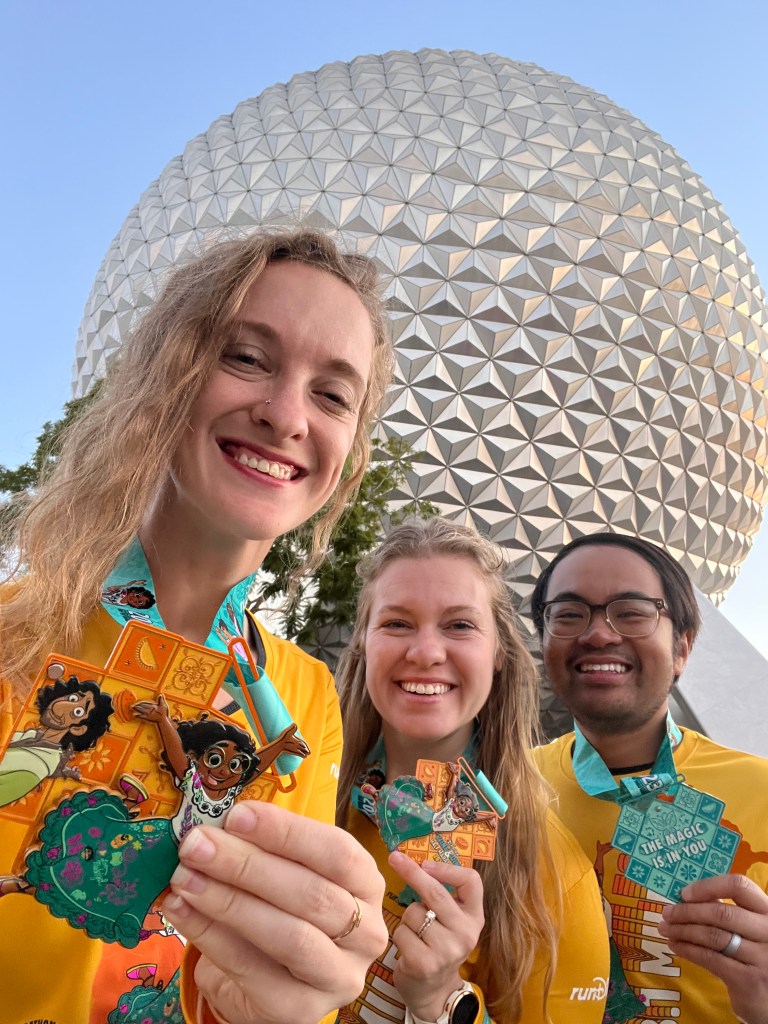
Still, I did it! I ran 13.1 miles, crossed the finish line, and accepted a medal. I’m glad I did it, and I’m glad this was my first race so that I didn’t have anything to compare it to! I don’t think my running journey stops here, and I’d like to run another half marathon to get a better perspective of how I really handle that distance, physically and mentally.
Finally, overall, I was most moved today by the support from crowds. When we ran through Disney’s Boardwalk resort area, people staying in the hotels had come down (so early!) to cheer us on. People drove out to random stretches of highway to hold up signs and cheer on their runners. There was a high school marching band playing, and later there was a choir to match it. Cast members called out words of encouragement. At one point, Rachel said to one person, “Thanks for showing up to work today!” The girl, who clearly would have rather been sleeping but was still there cheering on runners, said, “Thank you for saying that!”
As I ran back into EPCOT, my knees and hips were aching, and I was just focusing on finding that mental center to keep moving. After mile 12, every step was a personal record run for me, and I told myself I didn’t need to finish fast, but I wanted to finish strong. I was hurting but focused on not stopping.
For the last third of a mile, there were legitimate crowds, including a little section of stadium seating. They were holding up signs and calling out, specifically to “all of you” runners, how proud they were of us for being out there. Over the PA system, the announcer said, “How many of you are first-time half marathoners? Get those hands up!” I raised mine as I could finally see the finish line, and people cheered even louder. (Side note: Only two other people in my line of sight raised their hands, and I was surprised!)
With all the sincere support, my throat swelled up like I was going to cry. I was so grateful to them. I hoped they knew how much they were appreciated for coming out. I knew that for any who were runners themselves, they knew. I picked up my medal and some snacks as I walked back to the common area, but feeling like I’d finally, officially entered the running community was my favorite part of the day.
Gratitude to the Hiking & Running Communities
In fact, the community is the best part of both of these endurance activities, thru-hiking and running. On trail, countless people showed up at trailheads to provide food and drinks and little supplies for hikers, always smiling and asking questions about how the hike was going and trading stories. People in trail towns offer rides and places to stay. When a hiker would say something like, “Thank you for this. Truly, it means a lot to us,” the “trail angel” (as people who help hikers are affectionately dubbed) would often reply with something like, “Trust me, I know. I was there once.” So many people are so excited to cheer on thru-hikers—to offer tangible support however they can, to help out in the tough situations and to share in the triumphal moments.
What’s more, any hiker carrying the official AT thru-hiker hang tag on their backpack immediately earned some trust points, especially the farther into the trail you get: We all know it takes a certain type of person to live the backpacking life, after all. There’s an instant bit of kinship (though, disclaimer: there are exceptions).
The running community is definitely different, but there is an overlap. In particular, I think of the exchanges between runners and spectators. People in the crowd cheer on the runners, and runners often in turn thank people for coming out to show support. Both sides take intentional effort (and endurance! It’s not easy clapping and cheering for people you don’t know for so long!), and it’s such a lovely thing to build each other up by mutually acknowledging that effort.
I also think of some of the individuals who ran today with a particular purpose: Cancer warriors, or folks who’ve had a major surgery, or who’ve been told for whatever reason that they would never be able to do this, or who are running/walking for loved ones who can’t. A mother pushing her son in his wheelchair the whole way. A veteran carrying the flag. A family of three generations out there together.
There’s something special about endurance activities and the people who participate in them. Hiking and running are primarily individual exercises, yet they both have tight-knit communities. I feel grateful to be a part of both communities now. To anyone who has provided for me and encouraged me in my efforts—thank you!
I’m looking forward to hiking and running more, and also to showing up to provide for others and encourage them to endure.
Up Next: Next week will mark a year since I completed my AT thru-hike. To celebrate / commemorate, I’m sharing 10 snapshots of favorite trail memories.
Sources:
- Appalachian Trail Conservancy. “Frequently Asked Questions.” Appalachian Trail. n.d. Accessed November 1, 2023. https://appalachiantrail.org/explore/hike-the-a-t/thru-hiking/faqs/#:~:text=It%20requires%20great%20physical%20and,level%20and%20back%2016%20times.
- Runner’s World. “RW’s 12-week sub-2:30 half marathon training plan.” 7 May 2018. Accessed November 4, 2023. https://www.runnersworld.com/uk/training/half-marathon/a760100/rws-12-week-sub-230-half-marathon-schedules/
 Detroit, Reformed.
Leave a comment